The Foundation Sprint
Even the best startups take 2 days to lay their strategy.
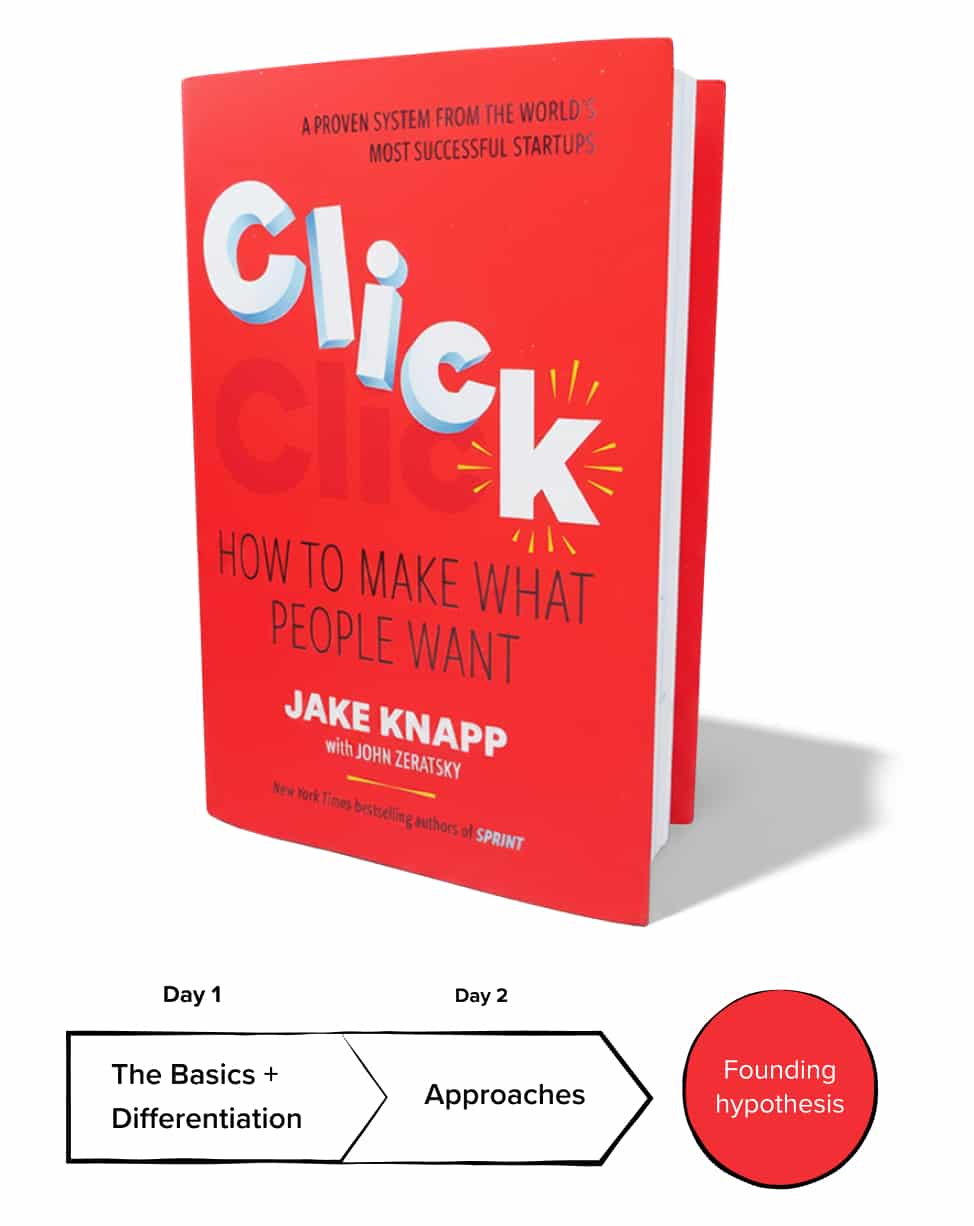
The Foundation Sprint is Jake Knapp and John Zeratsky’s strategic method, detailed in their book “Click” and used at Character Capital, their VC, with every startup they back. In 2 days, your team aligns on the customer, the problem, your unique strength and the approach to choose, to set a testable founding hypothesis.




















































The problem
Most products don't fail because of the code. They fail because of misalignment.
Teams jump to the solution before deciding on the problem, the target customer, or what makes them unique. Six months later: doubt, misalignment, forced pivots.
The Foundation Sprint fixes this strategic debt in two days, through short exercises, votes, and a Decider who makes the calls.
What is the Foundation Sprint?
A two-day framework created by Jake Knapp and John Zeratsky, both former Google Ventures partners, detailed in their book “Click”.
Where the Design Sprint tests a solution, the Foundation Sprint defines what deserves to be built. It’s the strategic step that comes before any design, prototype or development phase.
The workshop brings together a small team with a designated Decider.
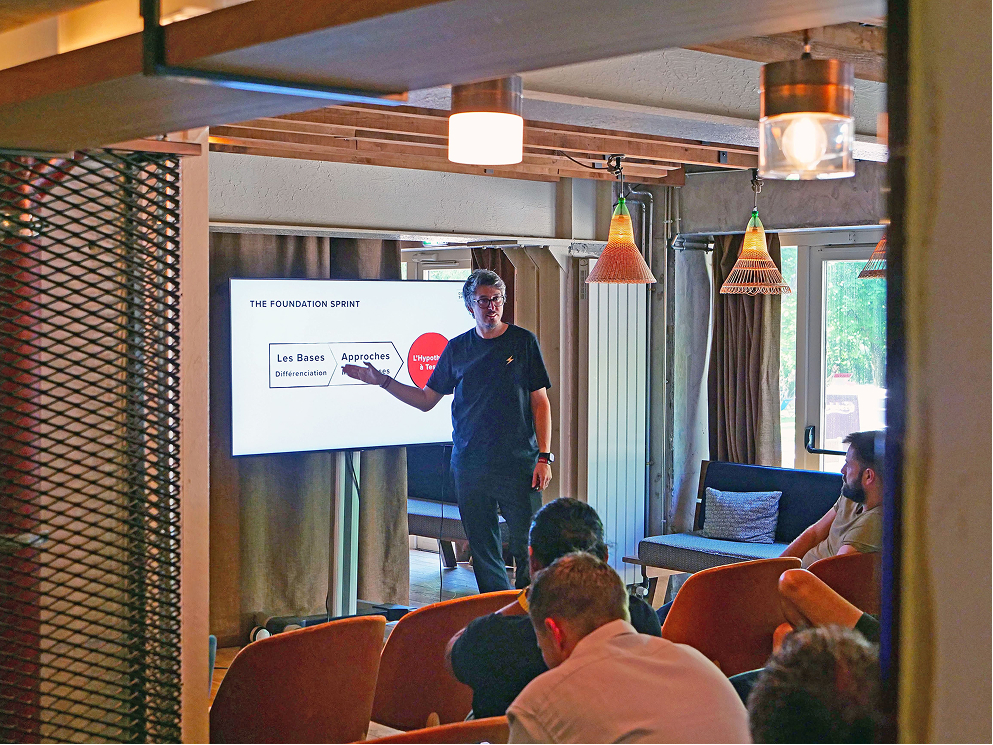
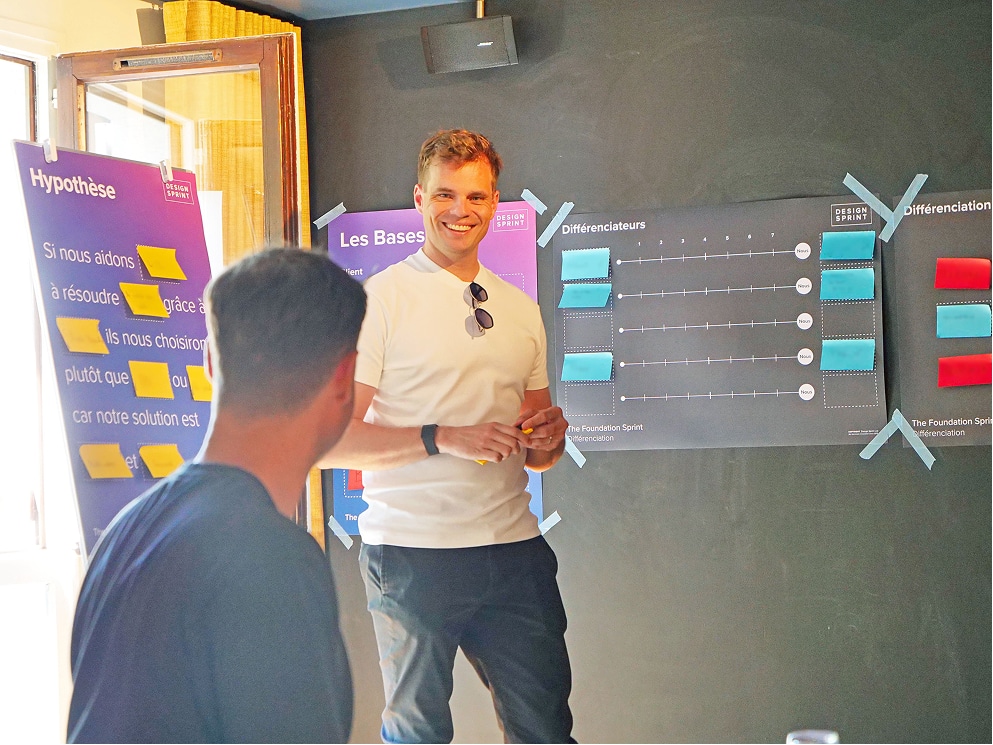
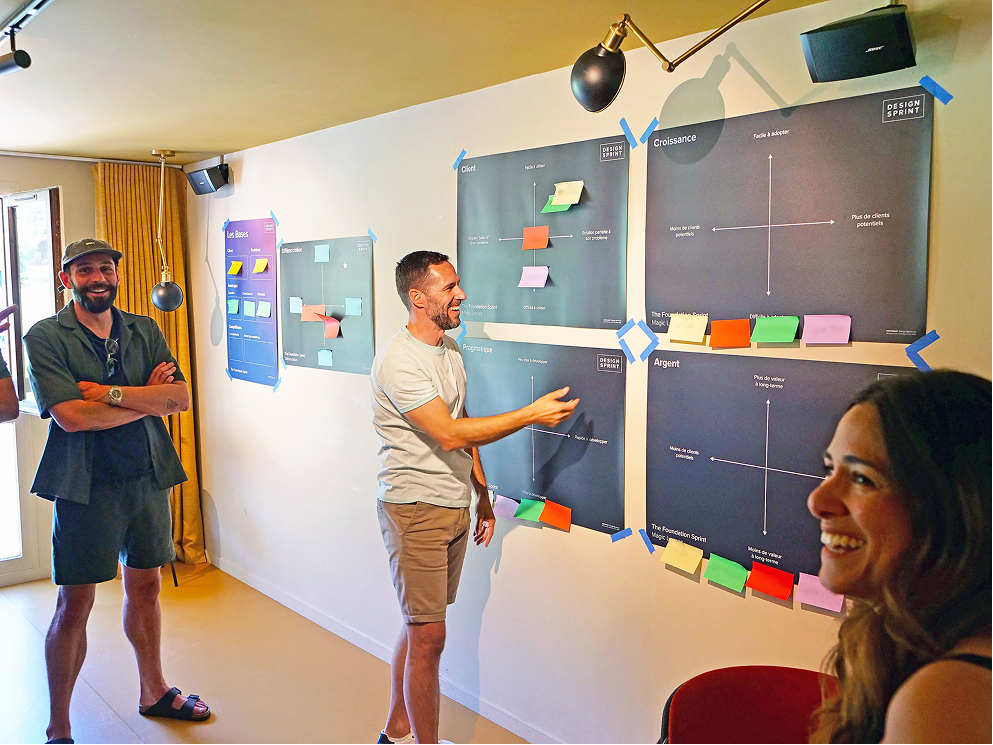
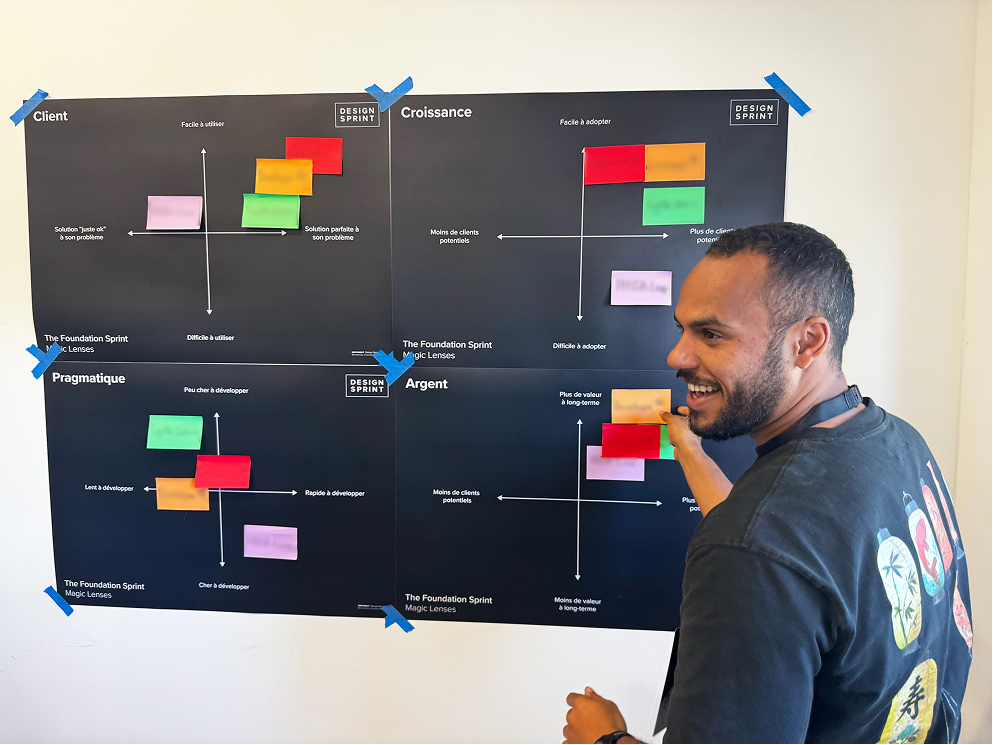
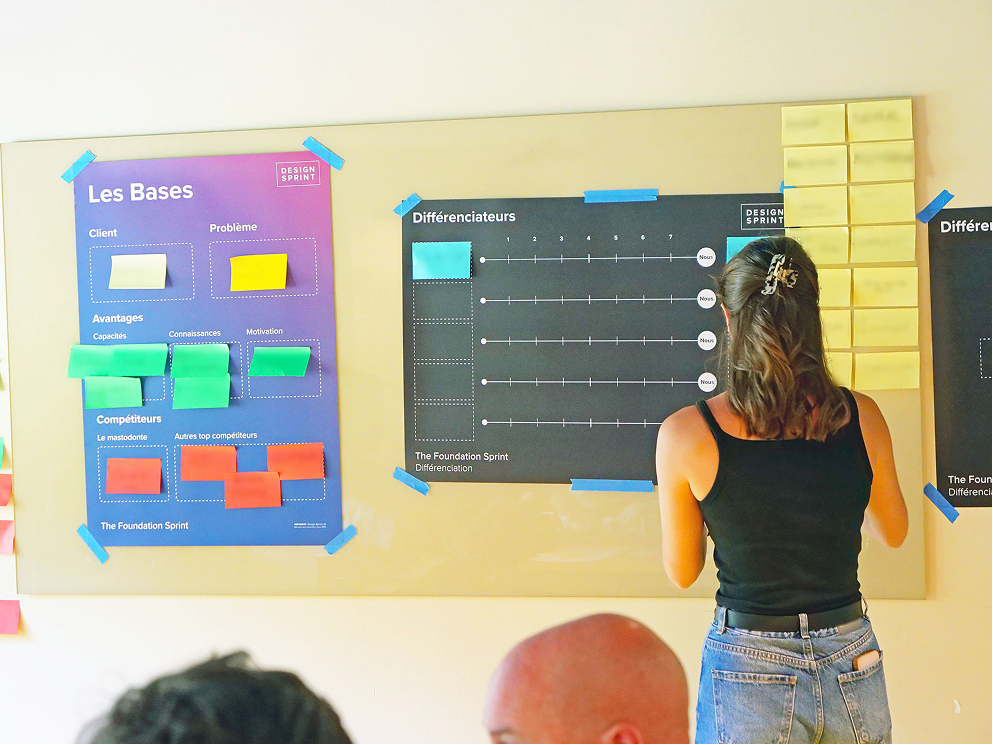

The method explained by its creators.
In this episode of Lenny Rachitsky‘s podcast, Jake Knapp and John Zeratsky unpack the Foundation Sprint in detail: how it was born, the exercises, and why this method transforms the way teams define their strategy.
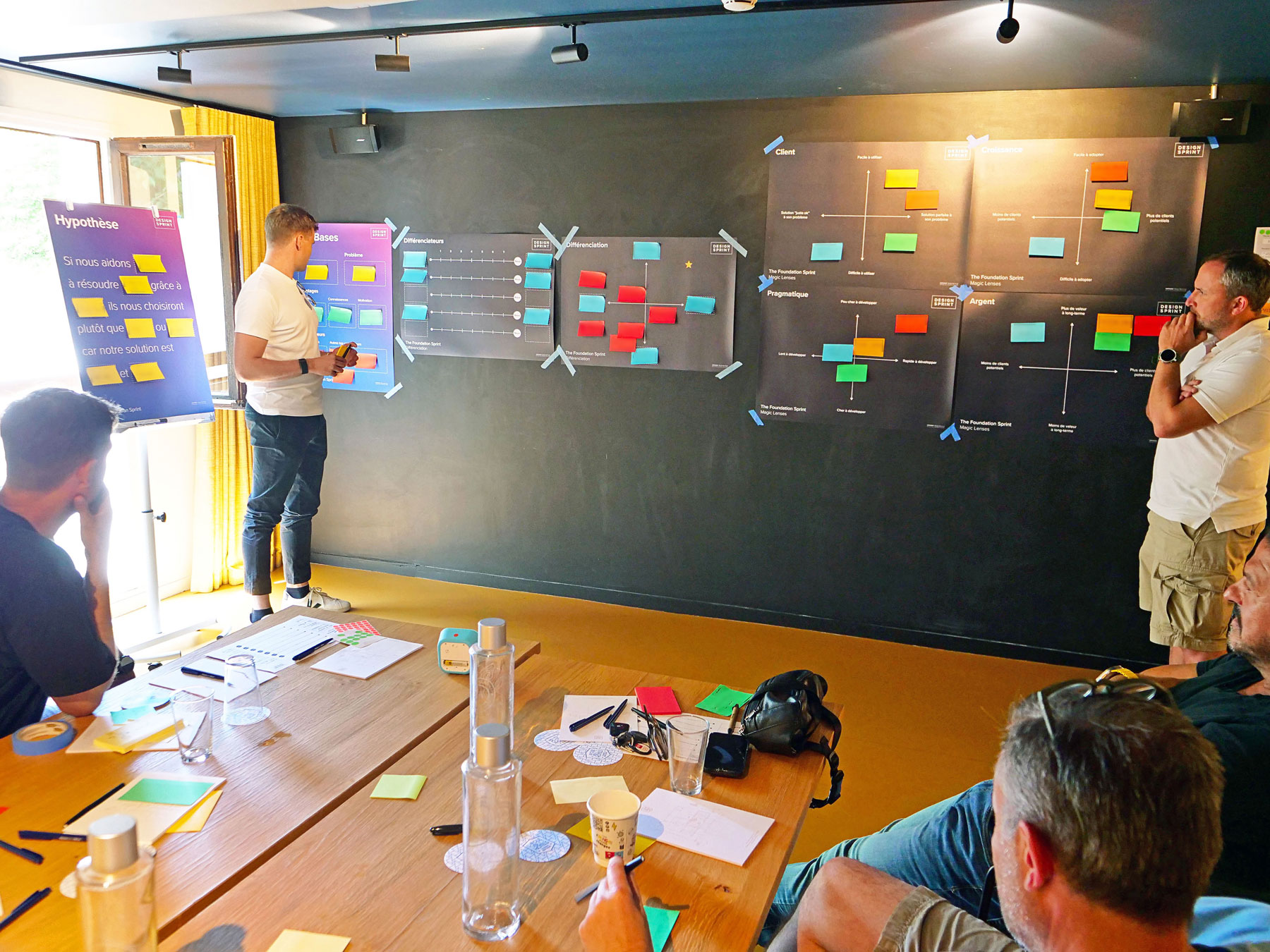
DAY 1
Align the team on the customer, the problem and your advantages to stand apart from the competition.
01
The Basics
The opening sequence of the Foundation Sprint sets the common ground: our target, the problem, our competitors, and what makes our team uniquely equipped to solve it.
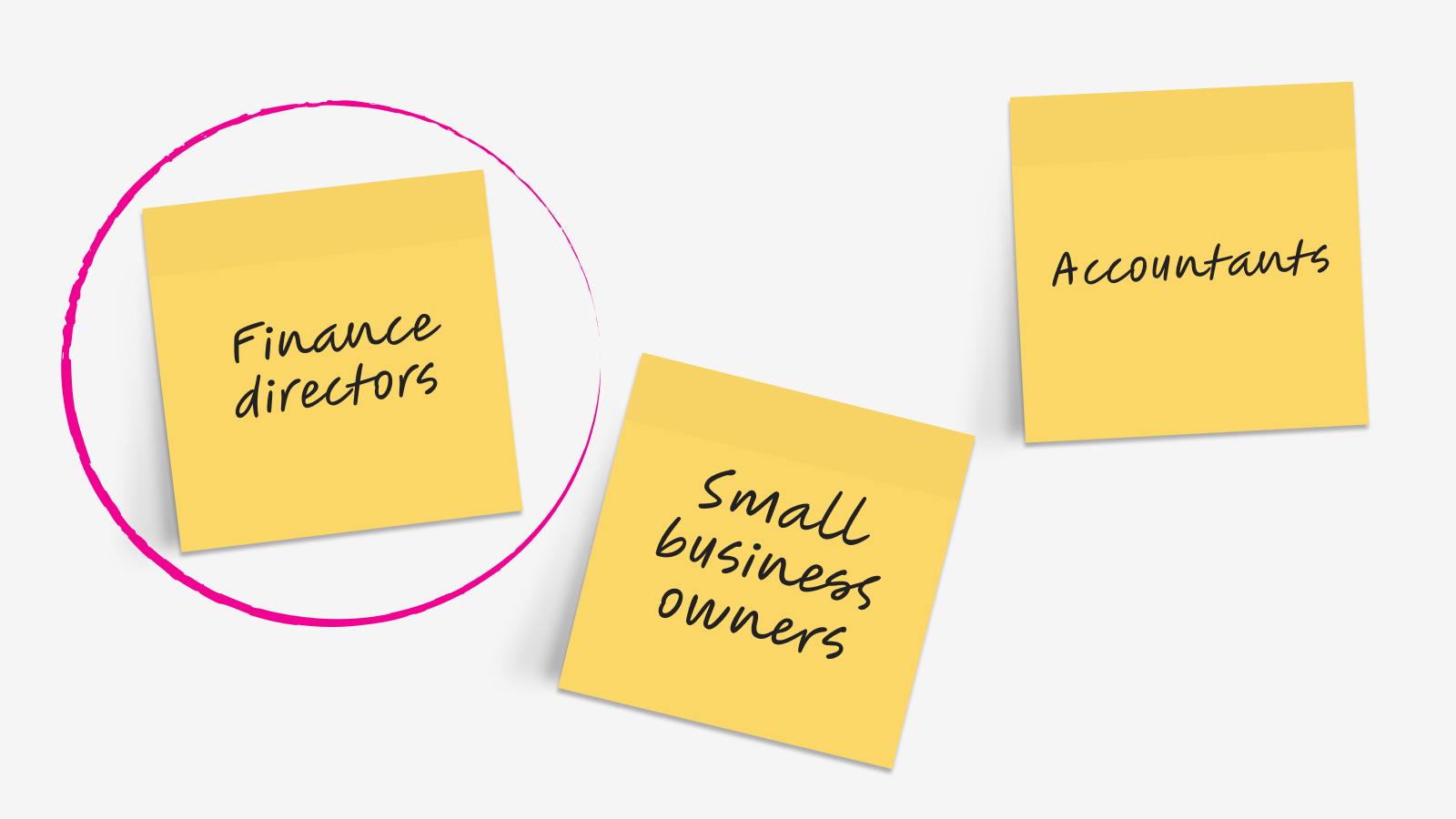
The Customer
Who are our priority users?
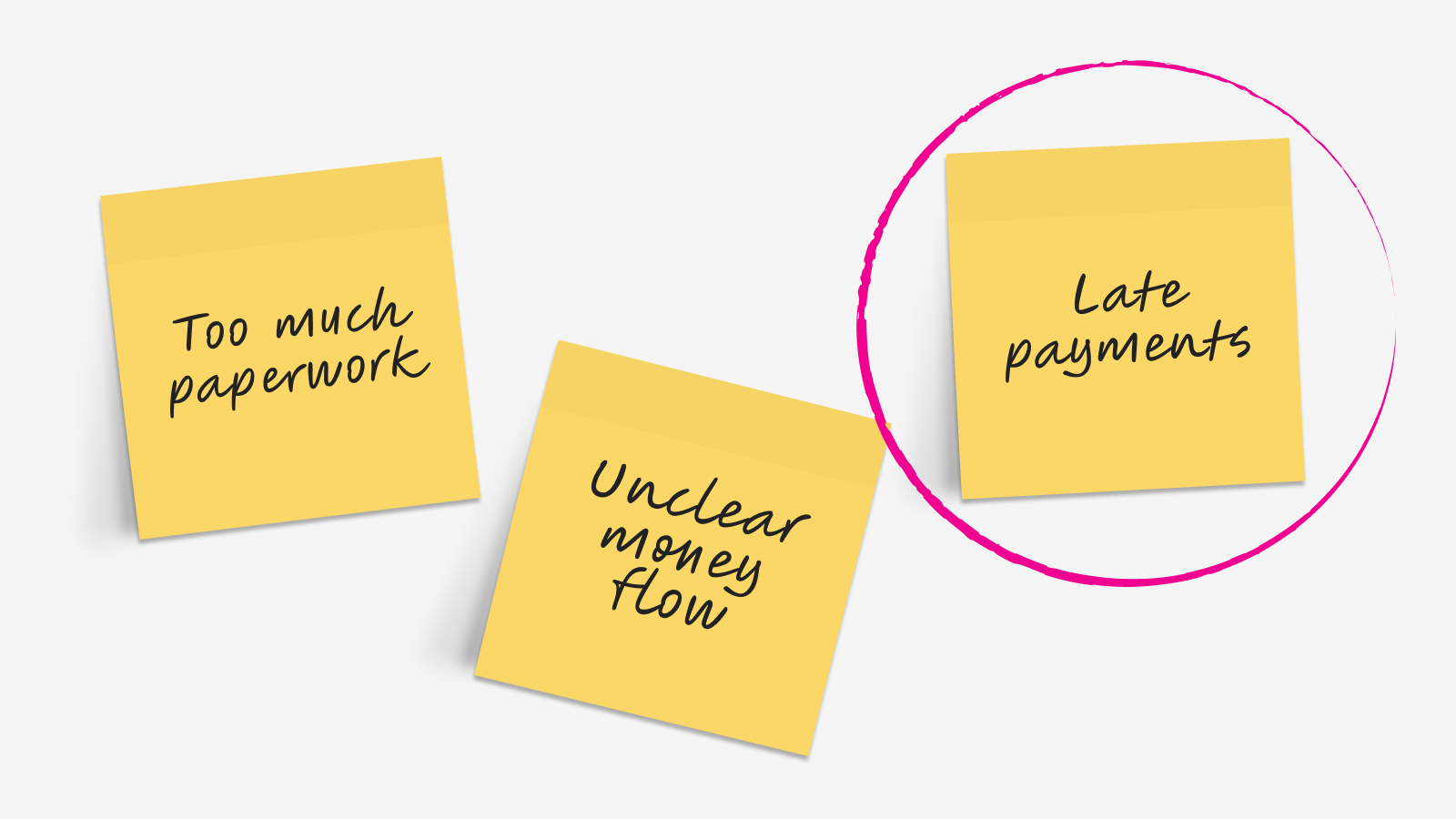
The Problem
Which problems can we solve?
Your Advantages
The three exercises that follow answer the same question from three angles: what makes your team best placed to solve this problem? Your capabilities, your insights and your motivations together shape what really sets you apart.
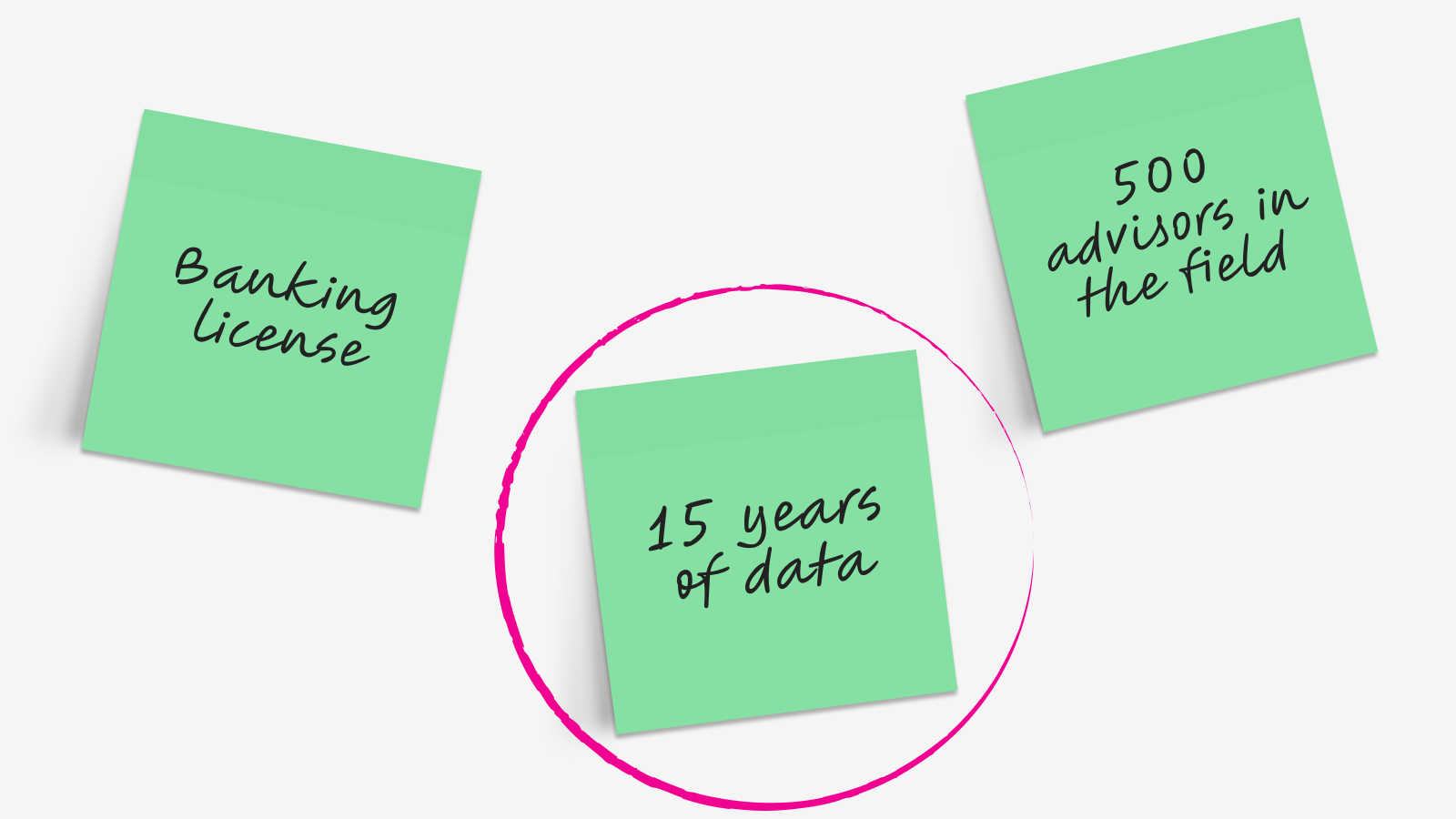
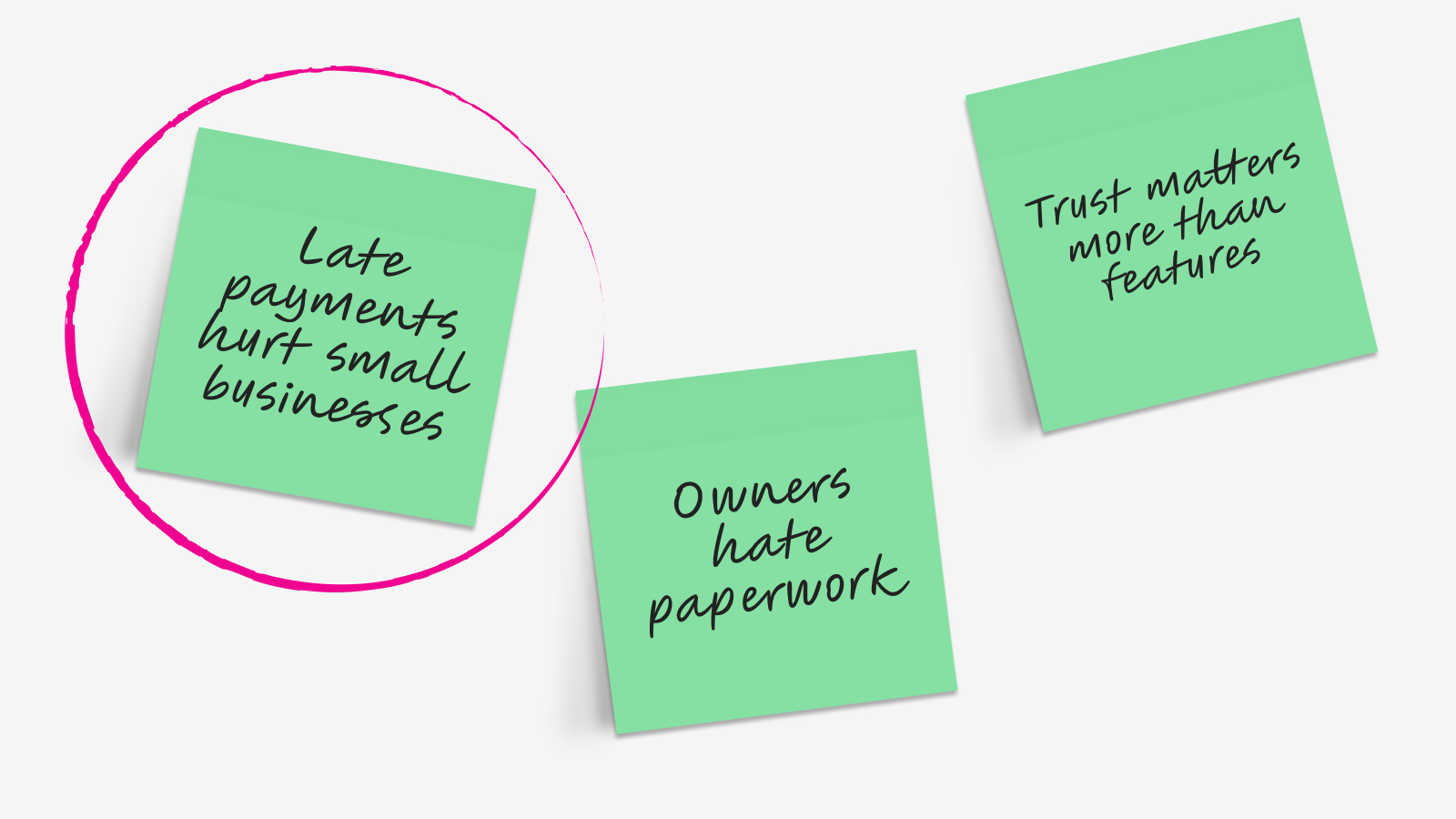
1. Your Capabilities
What do we do better than anyone else?
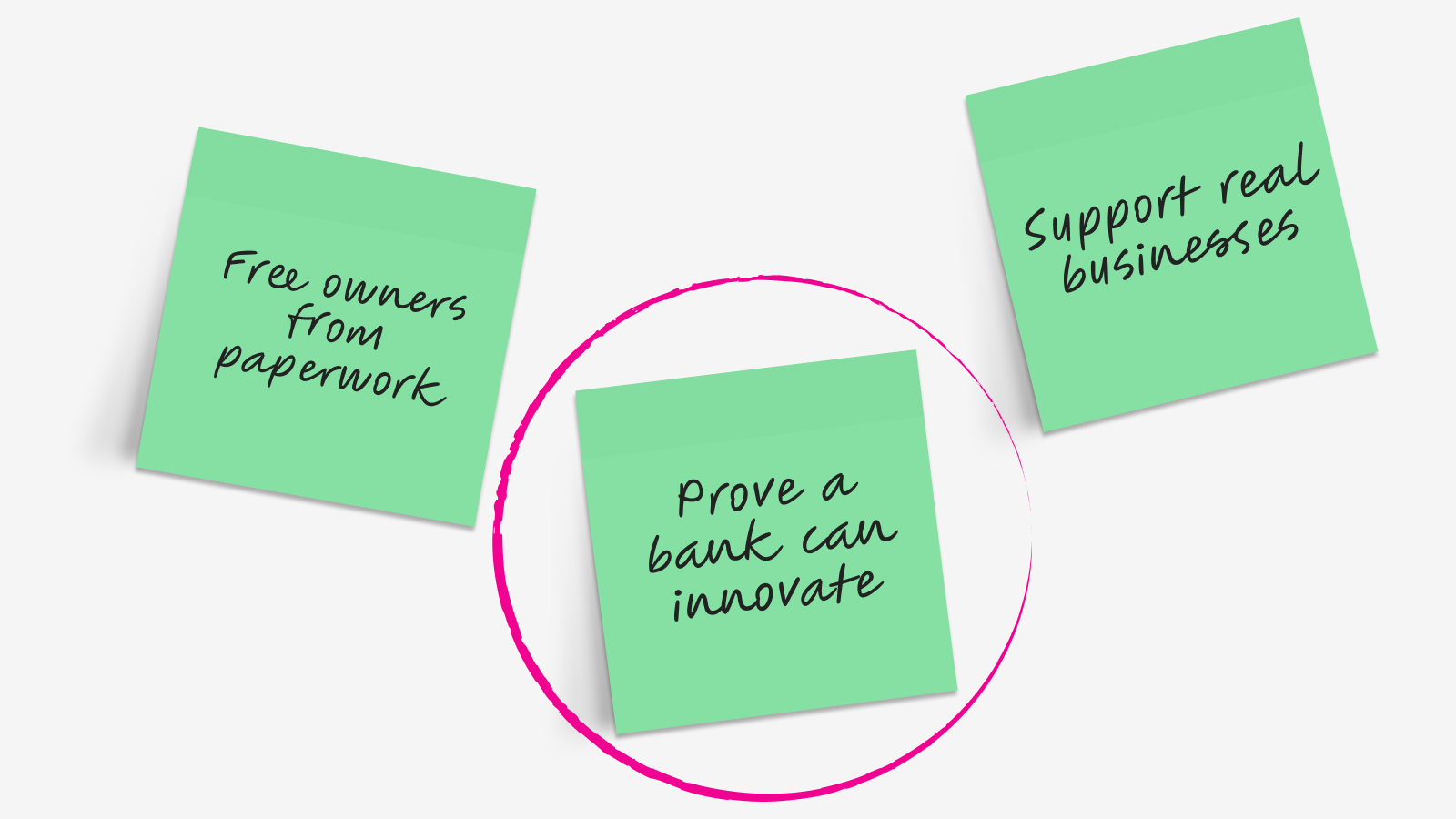
2. Your Insights
What do we understand that others miss?
3. Your Motivations
Why this team, this problem, right now?
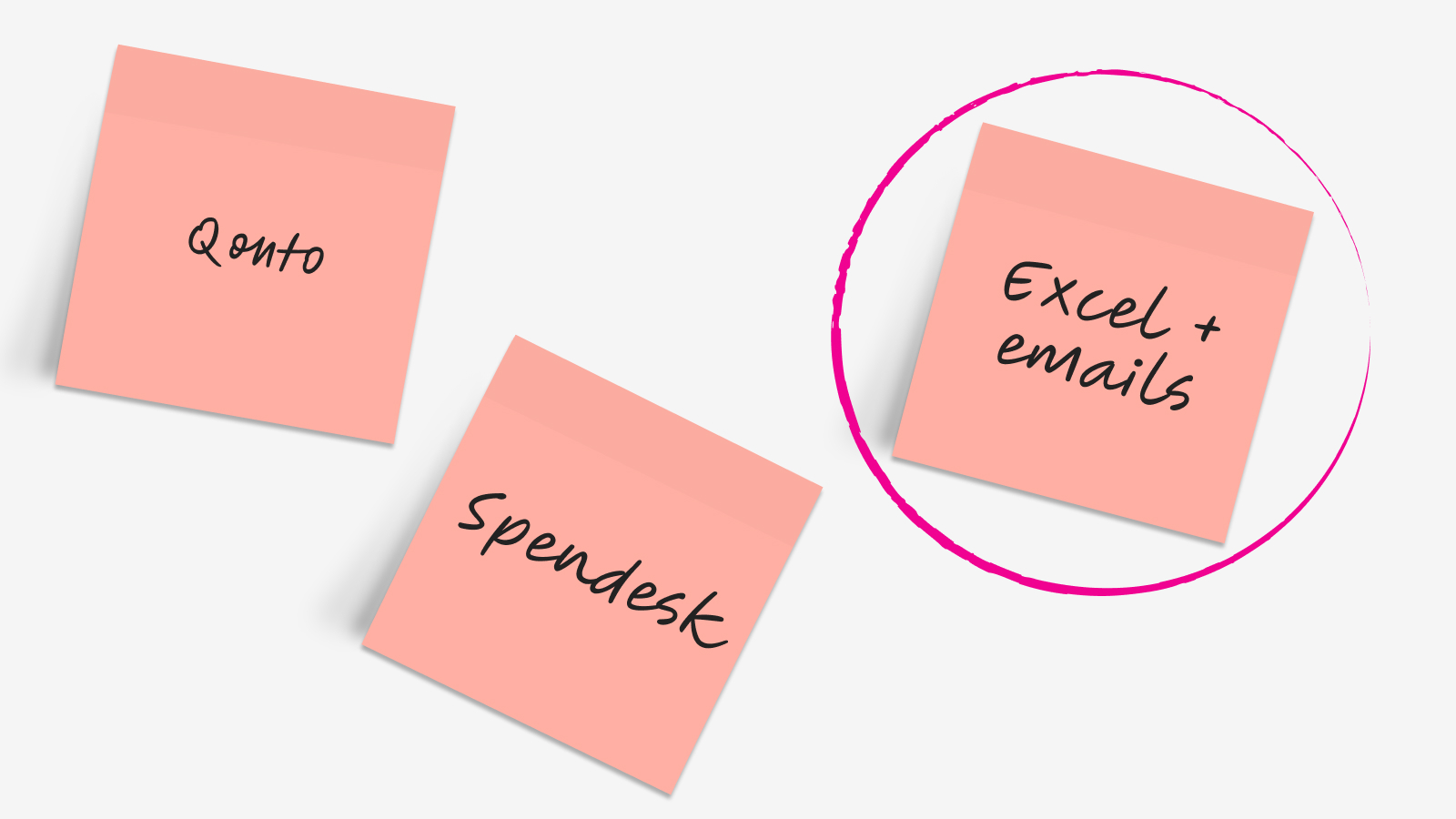
Your Competitors
How do customers solve the problem today?
Your customers already have a solution, even a flawed one. We identify your 3 to 5 real competitors, starting with the 800-pound gorilla of the market.
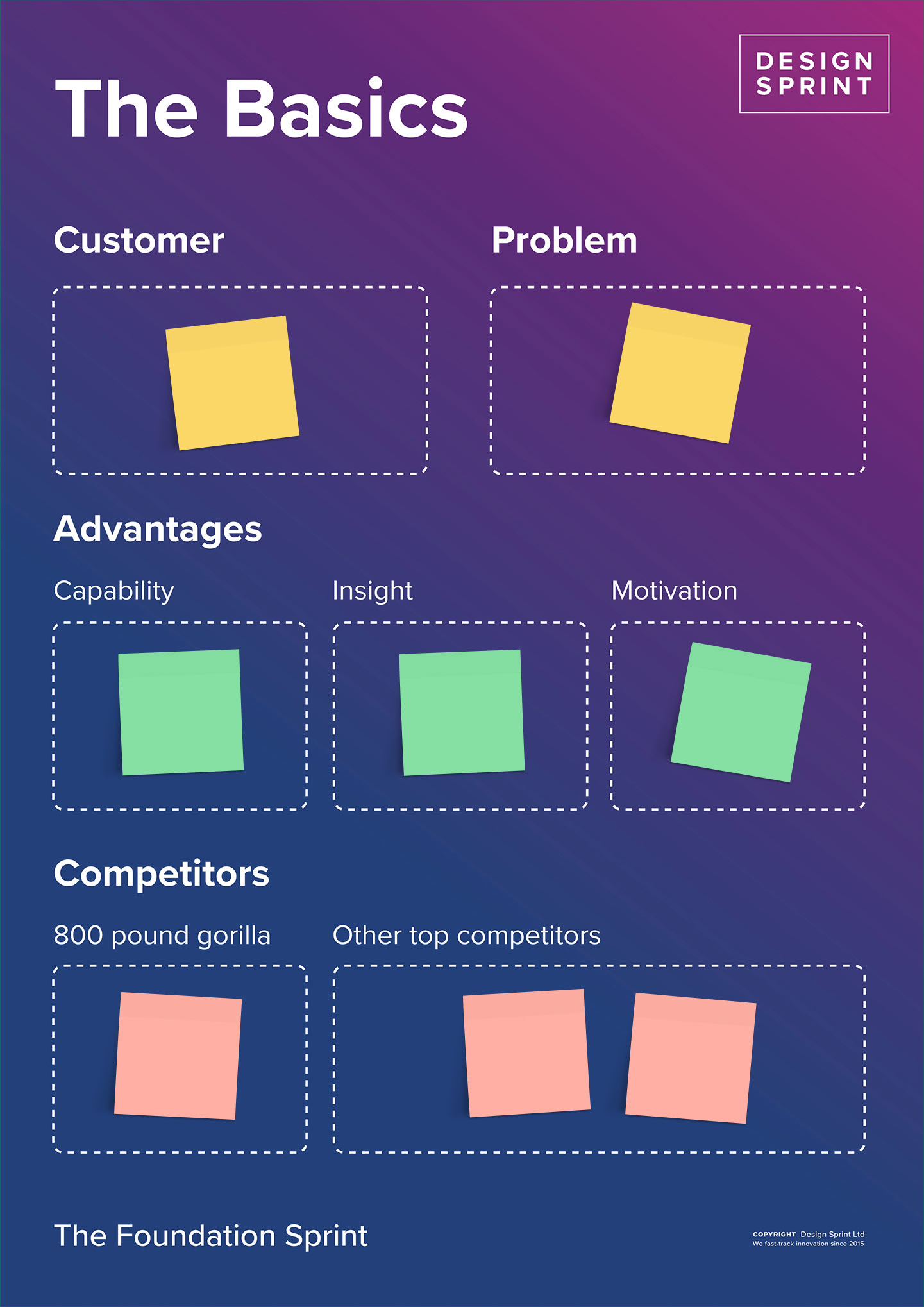
The deliverable of "The Basics"
A poster that captures everything from the sequence: Customer, Problem, Advantages and Competitors. The first tangible artifact of the sprint, signed by the whole team.
02
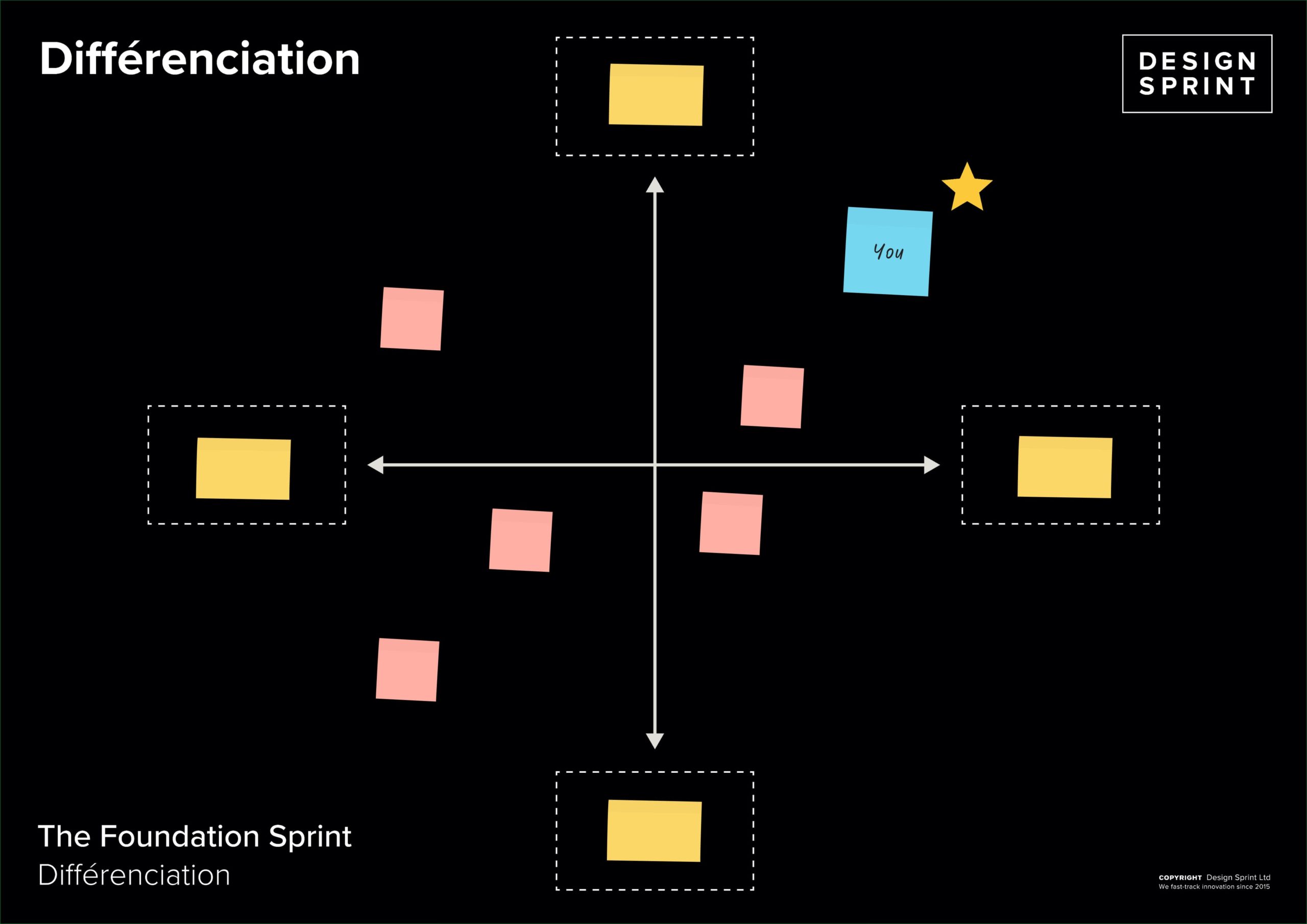
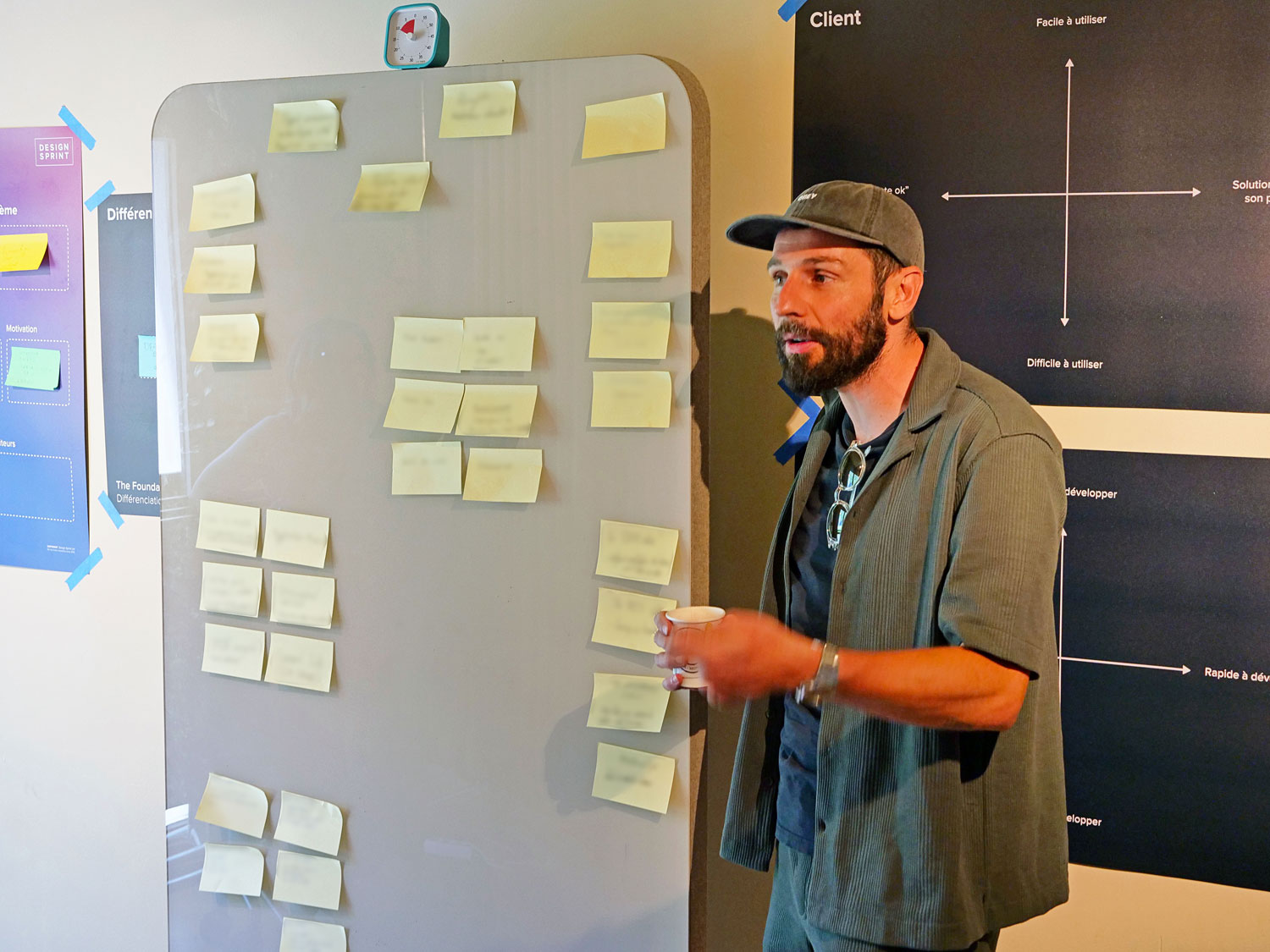
Differentiation
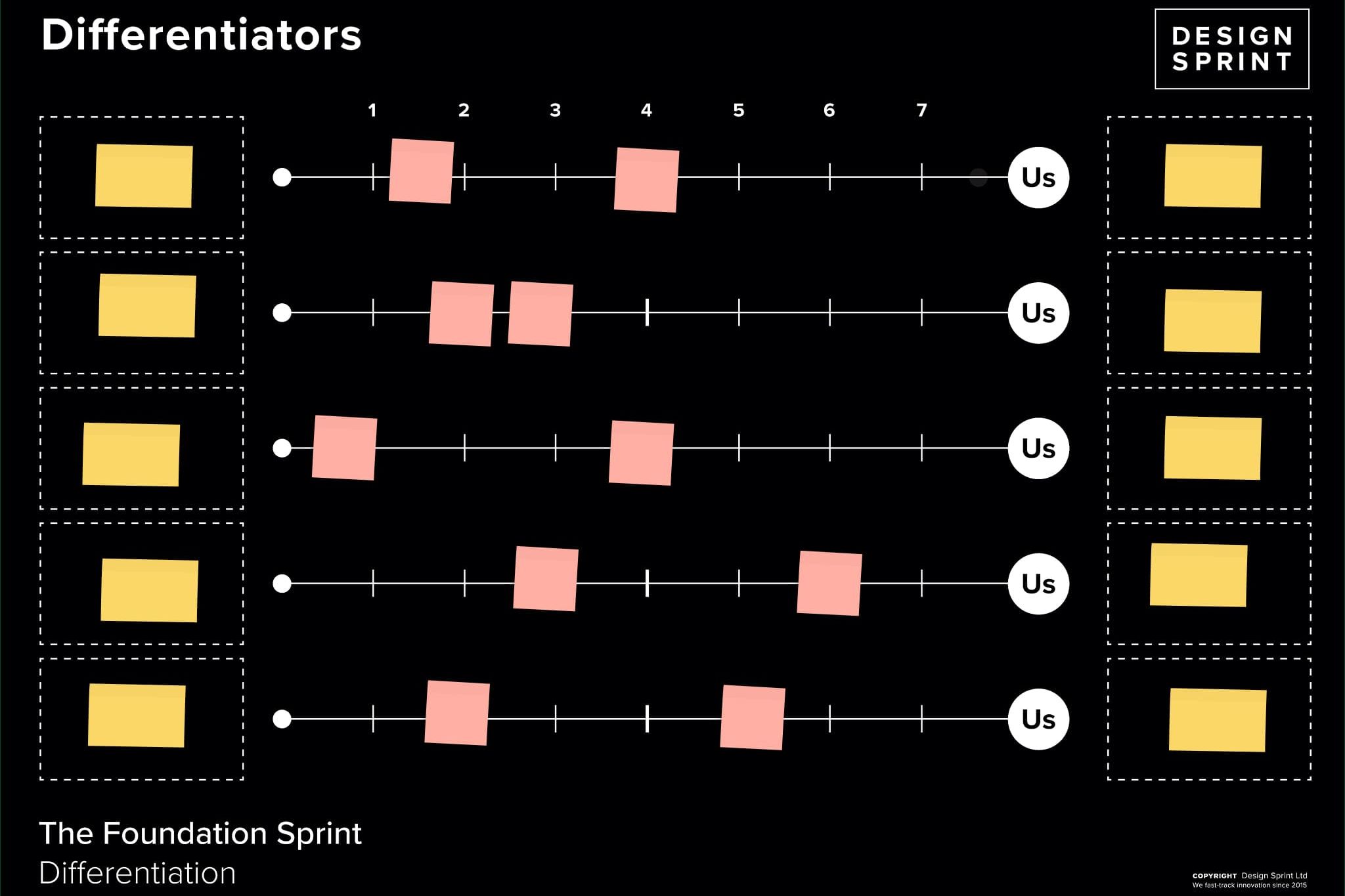
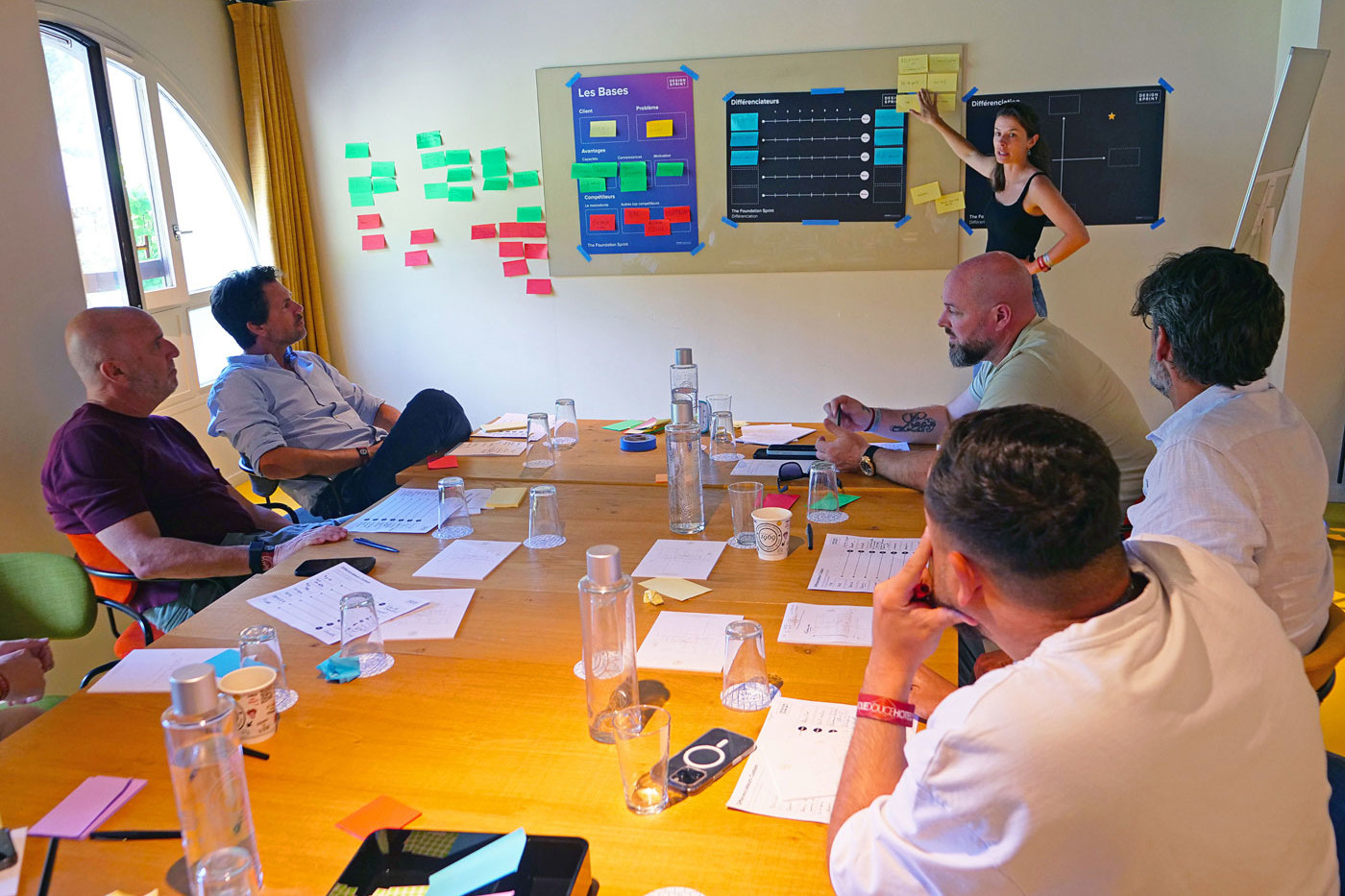
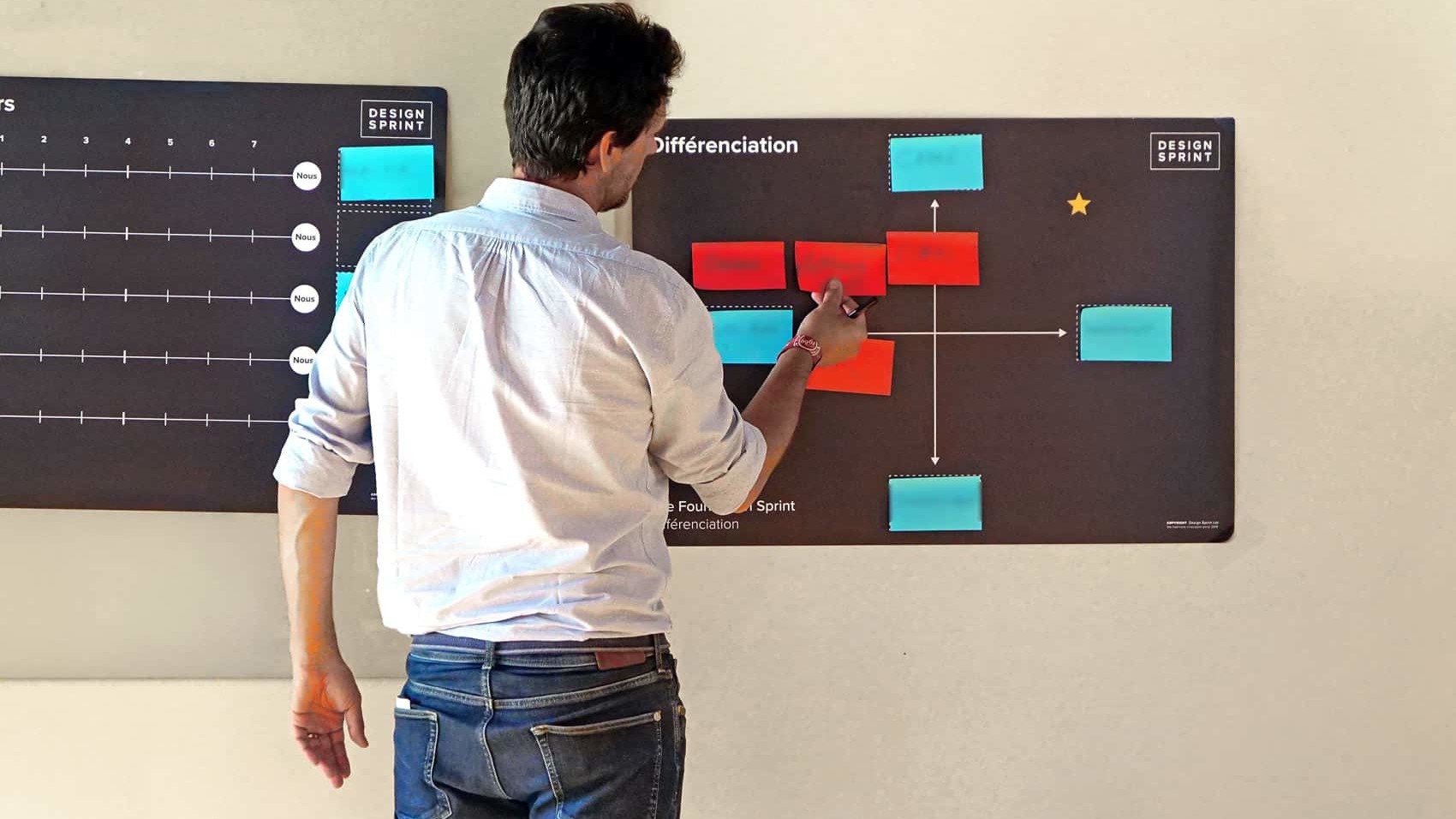
“Take advantage of your advantage,” says Jake Knapp. This sequence teaches you how to lean into your real strengths against the competition. Three exercises to turn your advantages into clear, visible differentiation.
1. Classic Differentiators
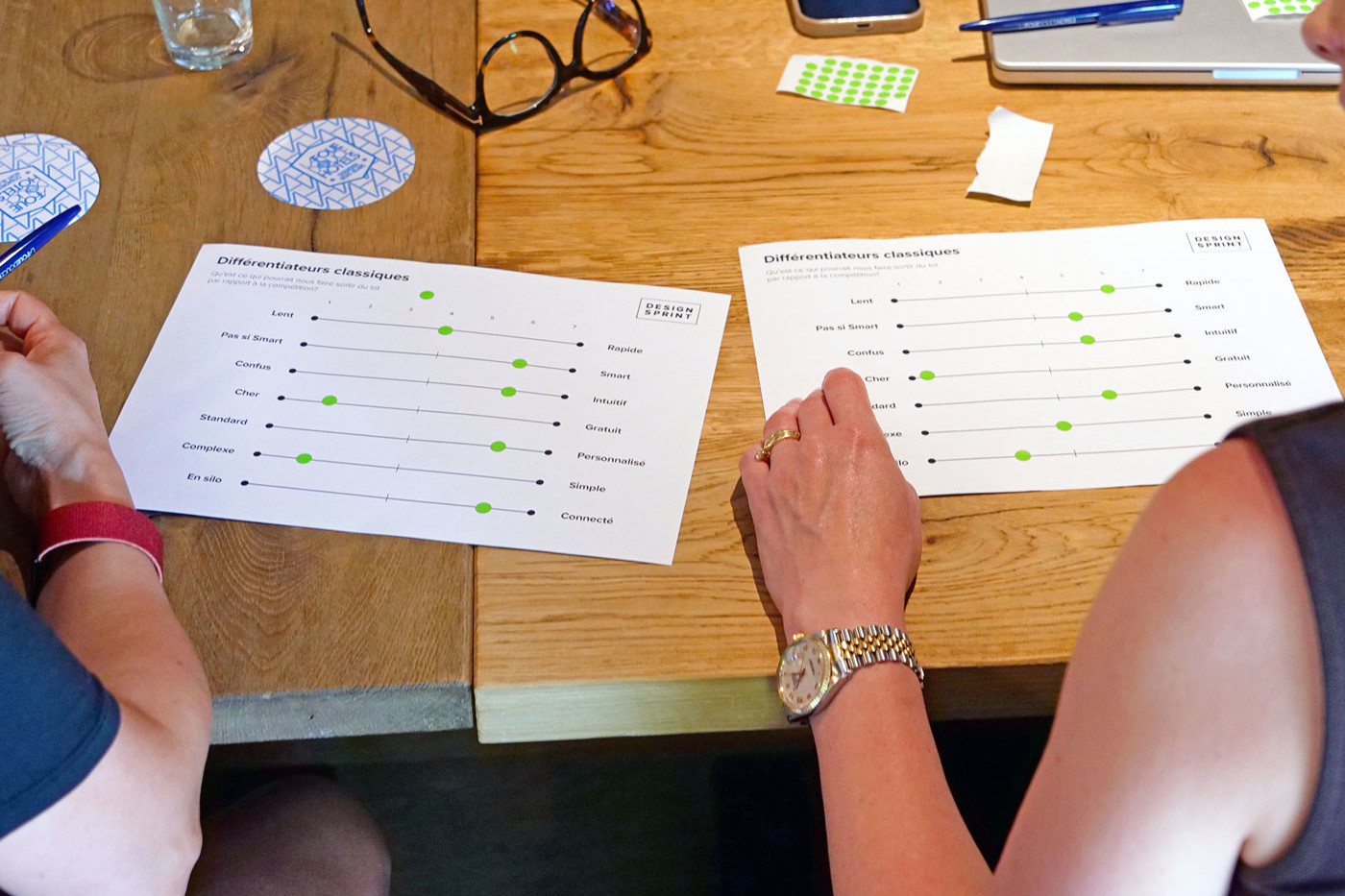
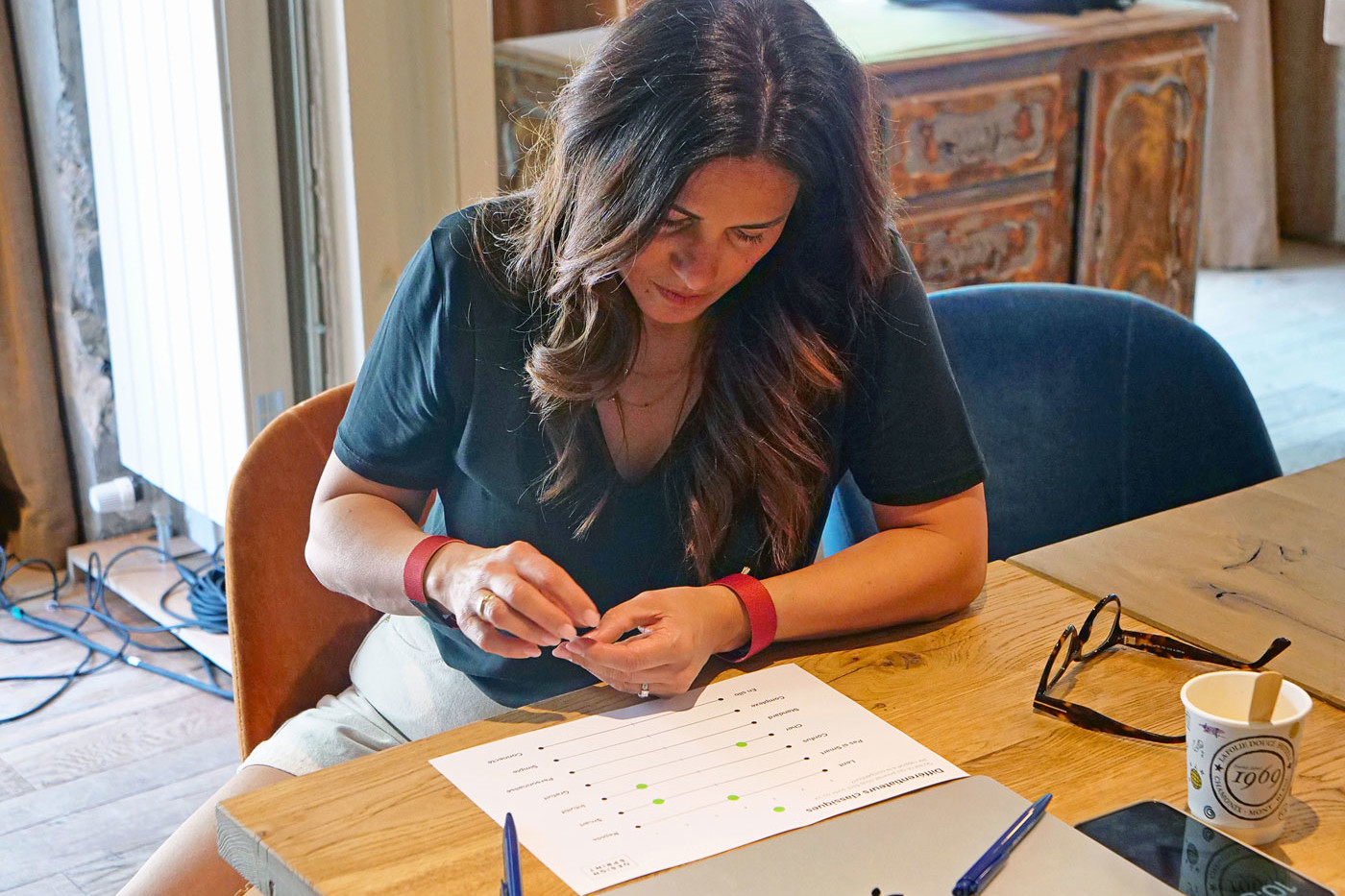
A warm-up on the universal axes: fast, simple, affordable. To see honestly where you stand next to the others.
2. Custom Differentiators
You can't beat the giants on the basics. You build your own axes, the ones where you do it better than anyone else.
3. Differentiators vs the Competition
The moment of truth. Each competitor is placed on the matrix. Either your differentiation holds, or you rebuild it.
The deliverable of "Differentiation"
A matrix that places every one of your competitors on your two most differentiating axes. At a glance, you see where you win, and where work remains.
DAY 2
Explore several paths, test them with 4 lenses, pick the best one and set a clear hypothesis for what comes next.
01
The Approaches
We draw inspiration from what already exists, generate options, shape them under a constraint that forces clarity, then shortlist the best candidates for the Magic Lenses filter.
Options
What shape could our product take?
The first idea isn’t always the right one. We explore multiple directions to have real choices on the table.
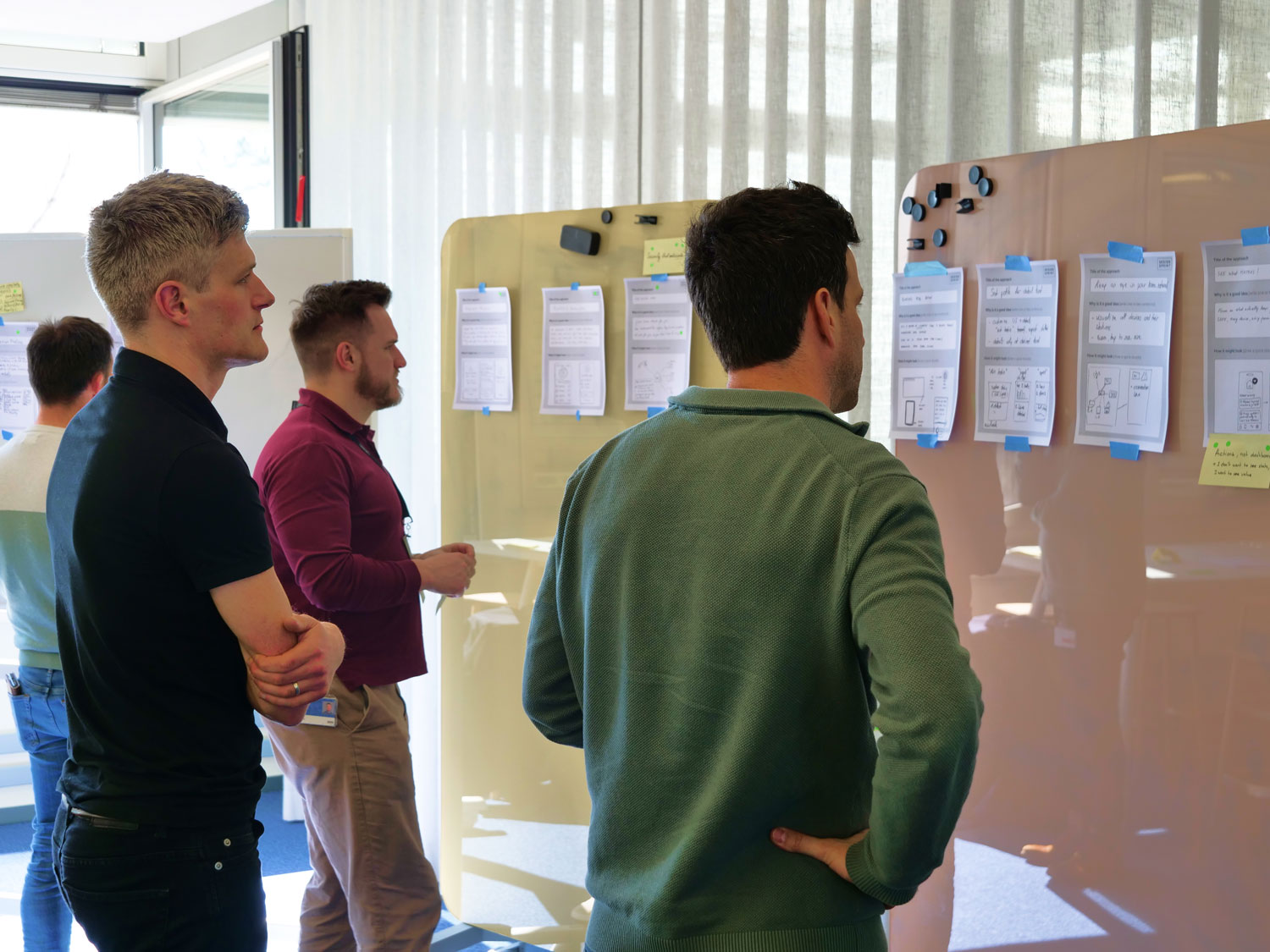
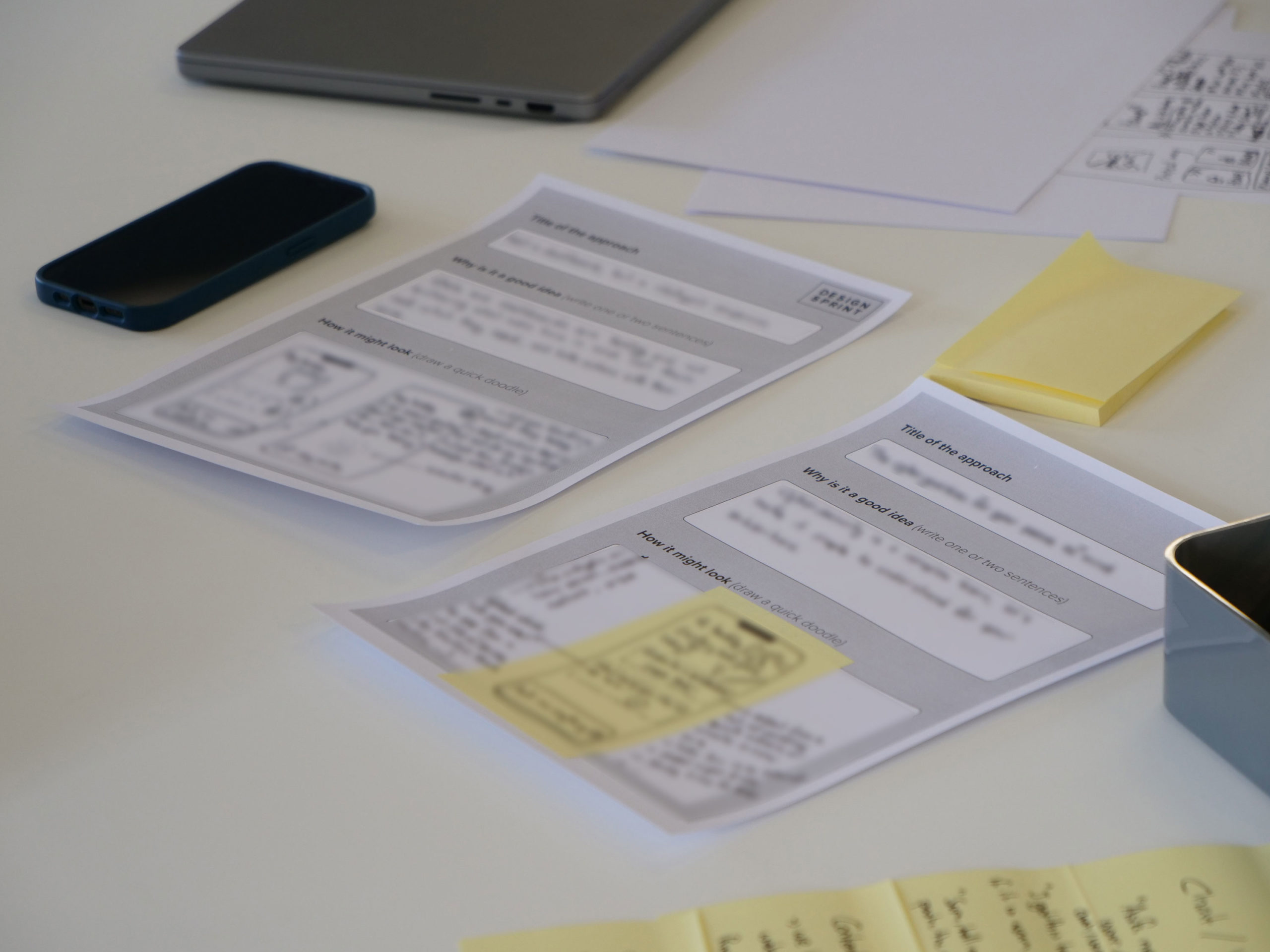
One-Page Pitches
What does each approach look like on a single page?
One page per option: a title, a sentence, a sketch. The constraint forces clarity. Every solution reads in 30 seconds.
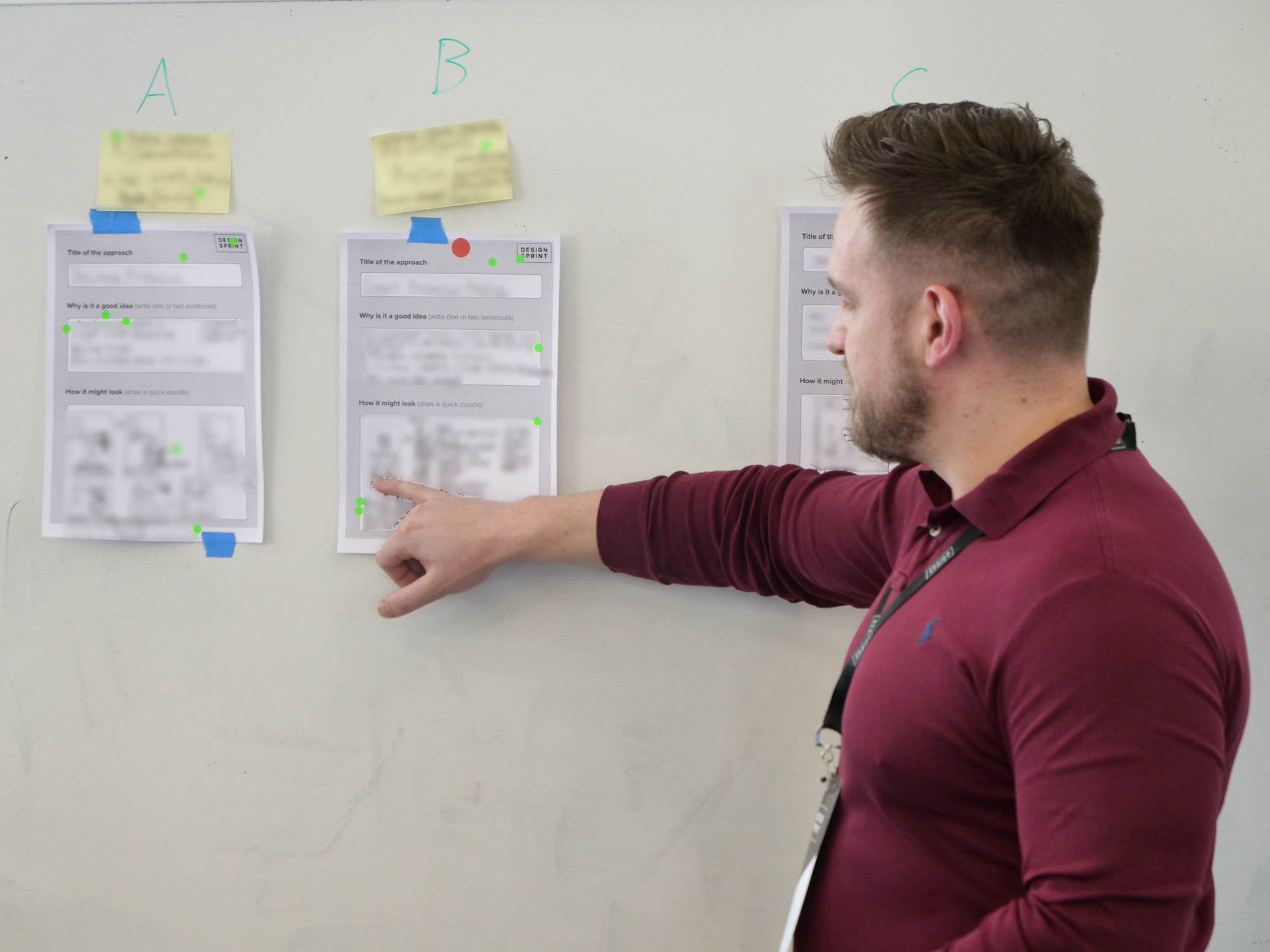
Solution Shortlist
Which approaches deserve to be scrutinized?
We keep 3 to 5 approaches for what comes next. The others aren’t thrown out: they become your backups.
02
Magic Lenses
Every shortlisted approach goes through four matrices that reveal desirability, feasibility, adoption and viability.
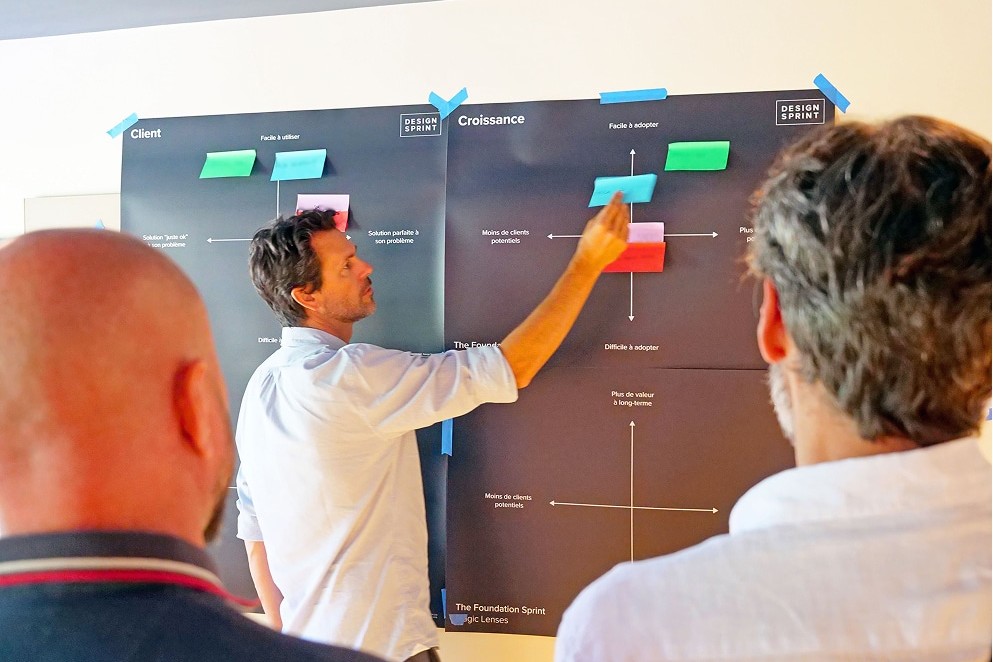
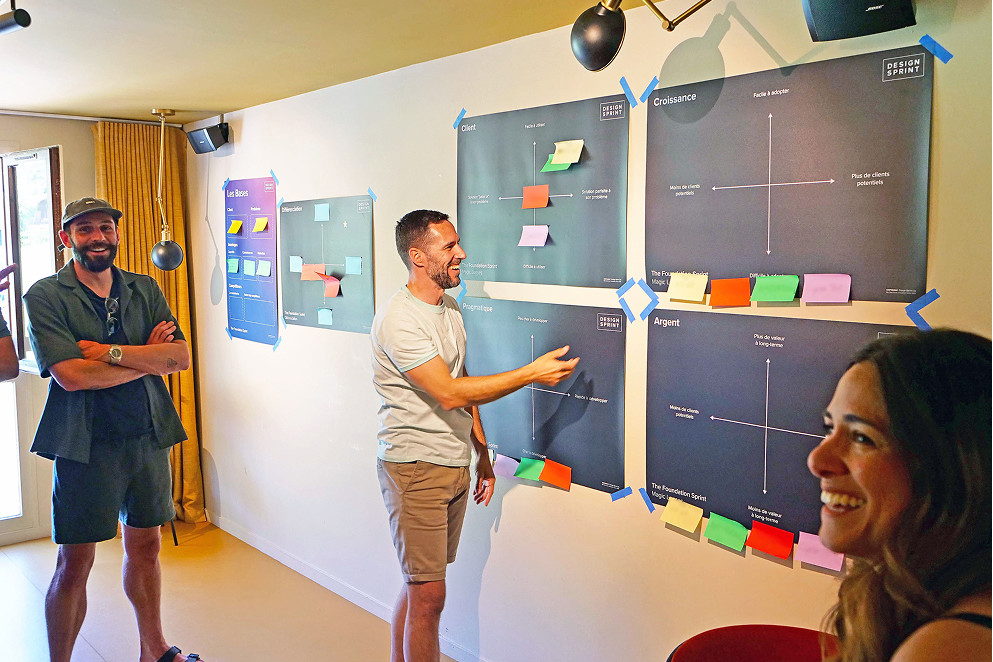
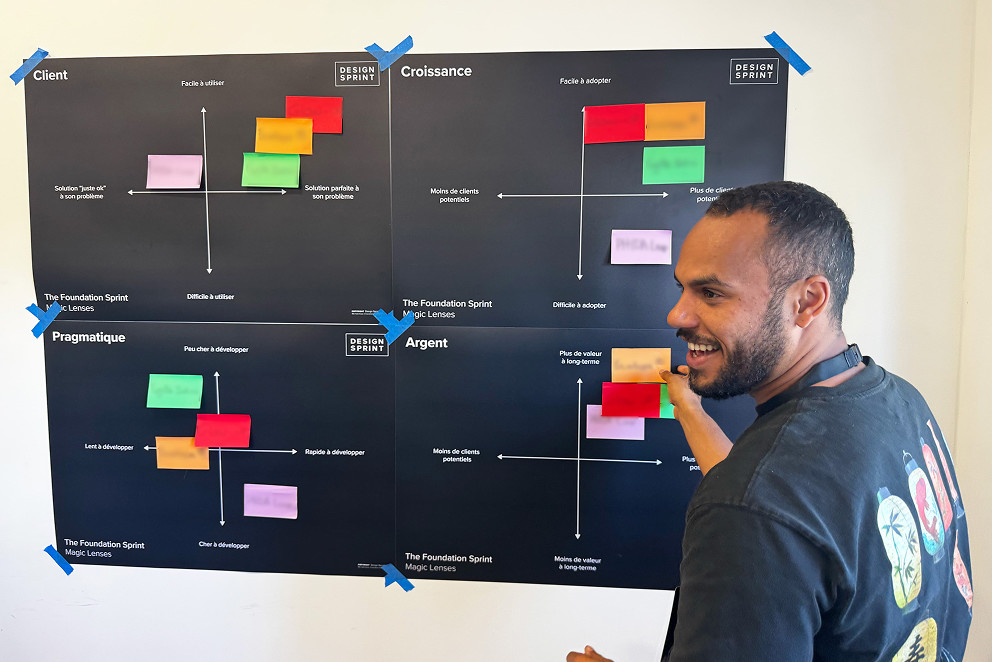
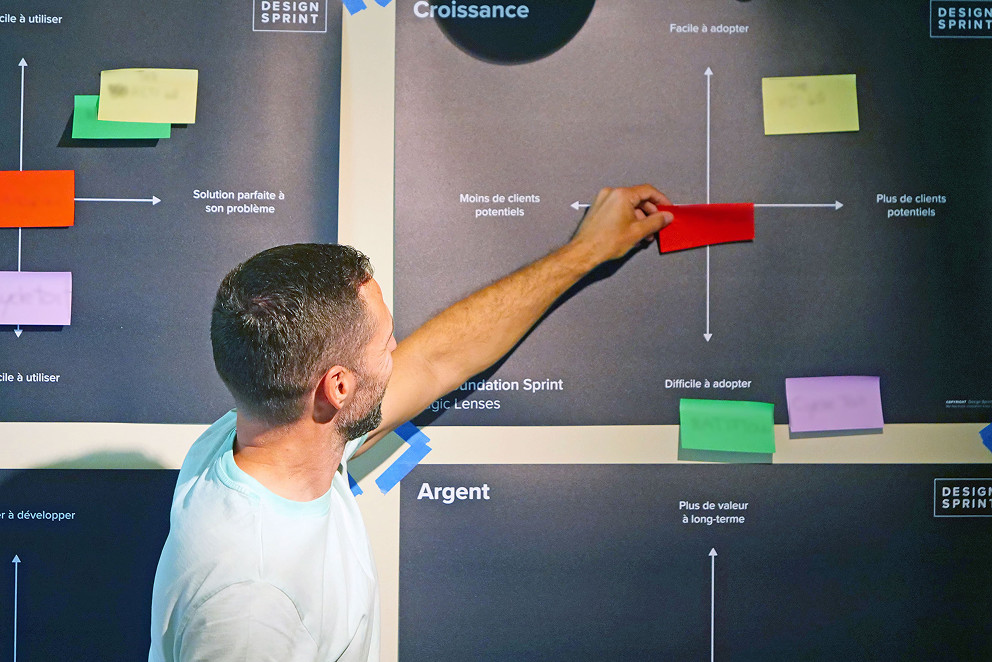
Desirability.
Is it simple and does it really solve the problem?
Feasibility
Can we build it fast, without breaking the bank?
Adoption
Easy to adopt and able to reach a wide audience?
Viability
Lasting value and a large enough market?
The best approach isn’t necessarily the winner across all 4 lenses. It’s the one that positions itself best overall. The team and the Decider make the call together.
The deliverable of "Magic Lenses"
The team and the Decider make the call together. One approach is chosen as the Top Bet. The others become explicit Backups, kept ready in case the Top Bet hits a blocker.
Design Sprint Ltd and the Foundation Sprint
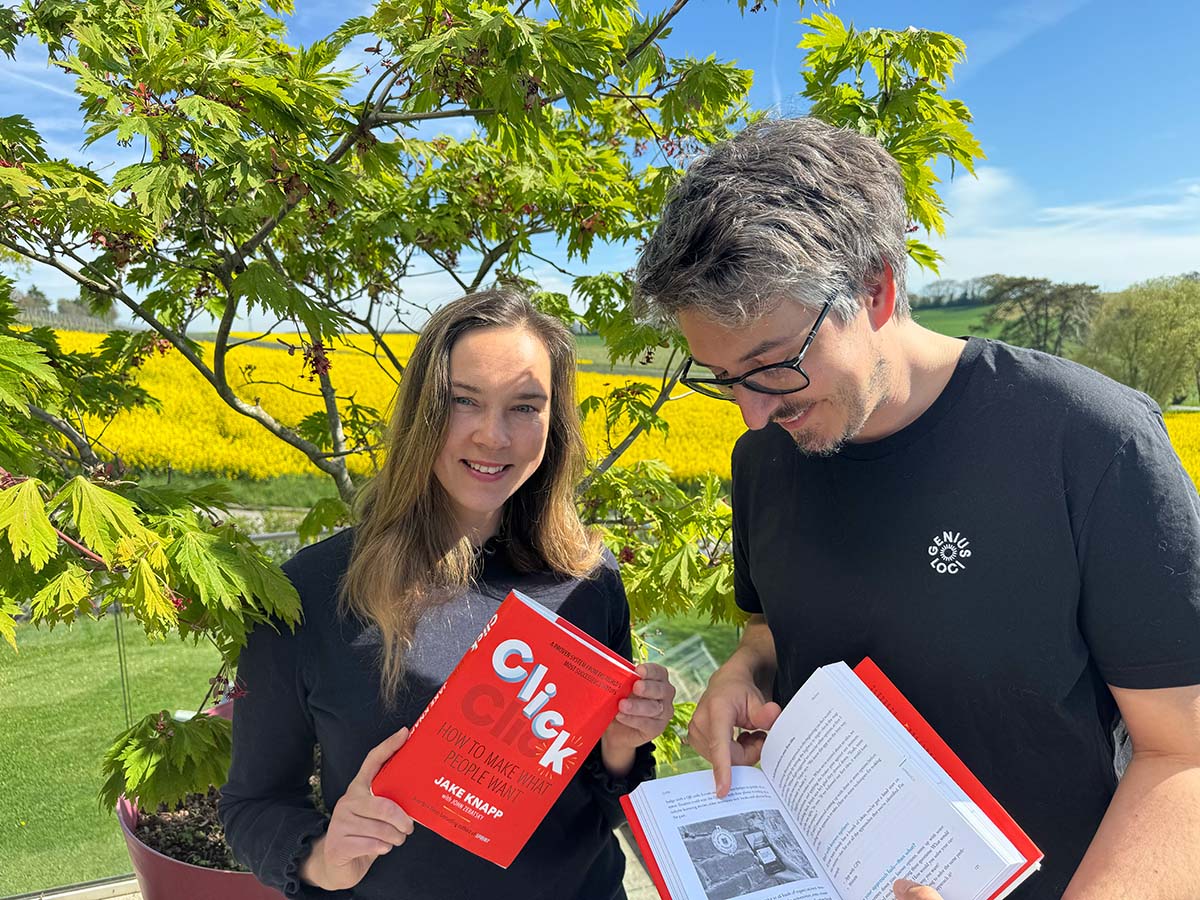
Since 2016, we’ve been working alongside Jake Knapp, the inventor of the Design Sprint and the Foundation Sprint. A friendship has also grown out of it.
It’s a long story, but our side-startup Genius Loci Medals is featured in the new book “Click” as the main case study of the “Magic Lenses” (Approach) exercise.
03
The Founding Hypothesis
The final artifact of the Foundation Sprint. A single canonical sentence that captures every deliverable in a testable statement. It becomes the challenge of a future Design Sprint, or the mission of an MVP.
If we help customer solve problem with approach, they will choose us over competitors because our solution is differentiator & differentiator.
What comes after the Foundation Sprint?
Strategy first, prototype next.
The Foundation Sprint sets the strategy: your hypothesis, your differentiation, your direction. The Design Sprint picks it up from there: in 5 days, that hypothesis becomes a prototype tested with real users. Two essential steps, each with its own moment.

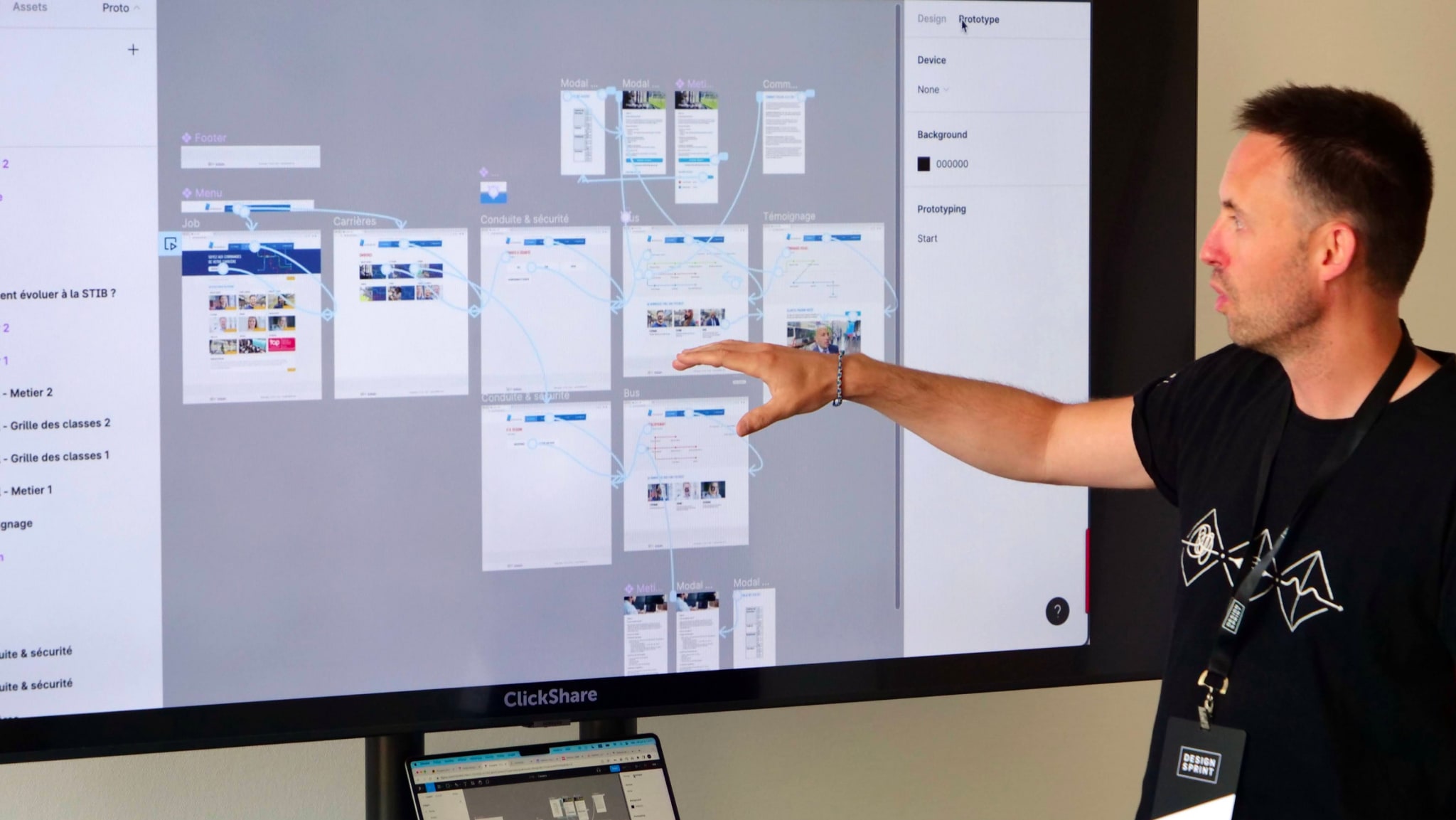
UX/UI Prototyping
From 5 days
Depending on the feedback, we iterate the prototype, then support you all the way to the MVP: UX/UI product design, prototyping days, vibe coding, or our partner network.
Foundation Sprint vs Design Sprint
| Foundation Sprint | Design Sprint | |
|---|---|---|
| Central question | What to build, and for whom? | How to concretely solve this problem? |
| Duration | 2 days | 4 to 5 days |
| Main deliverable | A testable founding hypothesis | A prototype tested with 5 users |
| When to use it | Before design, at launch or at a pivot | Once the strategic direction is set |
| Risk addressed | Building the wrong thing | Wrongly building the right thing |

A decade of expertise serving innovation.
European pioneers of the Design Sprint, official Google Global Design Sprint Chapter, we have delivered more than 150 sprints in 10 years, across every industry.
This expertise shows in every Foundation Sprint: two rigorous but enjoyable days, where the team moves fast, makes clear decisions, and leaves fully engaged, well beyond the method itself.






Let's sprint together
We’re based in Lausanne Switzerland 🇨🇭, and we work internationally.
Ready to take action and accelerate your innovation?
Let’s organize your next Design Sprint together starting today!